


ORIGINAL STUDIES
BACKGROUND: Body mass index is the most common method for diagnosing and classifying obesity. However, the reliability of this method has recently been increasingly questioned.
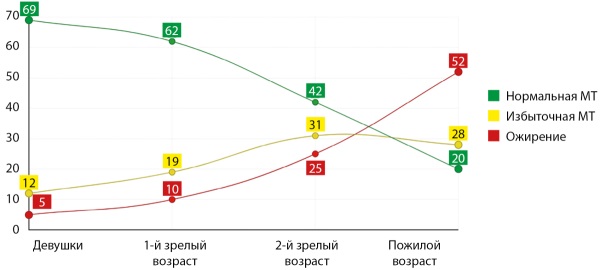
AIM: The study assessed the age dynamics of somatometric indices, including body mass index and body composition characteristics. A comparative assessment on the informative value of the considered indices and classification of obesity in the female population of Magadan region were also carried out.
MATERIALS AND METHODS: Seven hundred and fifty-four women of different age groups were examined to study the picture of physical development and characteristics of the body component composition using the bioelectric impedance method.
RESULTS: It could be seen that in the line from early adult females to the elderly examinees, a significant decrease in FFMI variables occurred with an increase in FMI, FM/FFM, total fat content, and the ratio of waist waist to hip ratio. We considered the fact that in the group with the normal BMI range, representatives of the 2nd mature and elderly age had a reduced content of the muscle component, as characteristic of sarcopenic tendencies, and combined with high values of FM/FFM, indicating obesity, and we suggested that it was incorrect to use the BMI indicator as an identifier of the overweight and obesity in older age groups. Meanwhile, the ROC analysis of dependence of BMI on the variables of FM/FFM >0.4 conv. Units allowed us to determine the optimal range of normal body mass in the group of early adult females and representatives of the 1st mature age. It was equal to 24 kg/m2. The correlation analysis showed no bonds between BMI and the FM/FFM ratio in the subjects of the 2nd mature and elderly age and, like the ROC analysis, it also indicated a restriction on the use of BMI as a marker of obesity risk in these periods of ontogenesis.
CONCLUSION: The Magadan region female population survey has shown that standard BMI ranges appear to be uncertain criteria for classifying obesity in women of the 2nd mature and elderly periods of ontogenesis, while the FM/FFM ratio indicator can be a more suitable informative marker for identifying obesity and sarcopenic signs, owing to its considering the body composition components.
AIM search for new genetic predictors of autoimmune adrenal insufficiency (AAI).
MATERIALS AND METHODS: In n=54 patients with AAI (isolated and as part of type 2 autoimmune polyglandular syndrome (APS-2; group 1)) and n=32 healthy individuals (group 2) we analyzed polymorphisms in IL28B (rs12979860, rs8099917), TLR9 (rs5743836, rs352140), TLR2 (rs5743708).
RESULTS: In group 1, compared with group 2, a predominance of CT genotype of rs12979860 polymorphism of IL28B (p=0.024), and T allele of rs5743836 polymorphism of TLR9 (p=0.044) was revealed. The allele C of rs5743836 polymorphism of TLR9 (p=0.044) was more common in group 2 than in group 1. With respect to other genotypes, alleles and haplotypes, no significant differences (or differences at the level of statistical trend) were found between groups 1 and 2.
CONCLUSION: Thus, it is possible that the CT genotype according to the polymorphic locus rs12979860 of the IL28B gene and the allele T of the rs5743836 polymorphism of the TLR9 gene are prognostic markers that increase the likelihood of developing AAI due to violation the peripheral immune tolerance (IT), whereas the allele C of the rs5743836 polymorphism of the TLR9 gene performs a protective role in this disease in the Russian population.
BACKGROUND. Cushing disease (CD) is a severe neuroendocrine disorder caused by excessive secretion of adrenocorticotropic hormone by a pituitary adenoma. This disorder leads to hypercortisolism and systemic complications (obesity, hypertension, osteoporosis, etc.), which significantly increase mortality and reduce quality of life. Epidemiological data on CD vary depending on the assessment methods, making it difficult to determine the true prevalence.
AIM. To analyze the epidemiological and clinical characteristics of CD using data from the Russian database of hypothalamic and pituitary tumors (OGGO).
MATERIALS AND METHODS. The study was conducted using the OGGO clinical and epidemiological monitoring database in Russian Federation, which includes 84 regions, with date of analysis January 1, 2025. The OGGO database has been created in 2006, and has been available as online resource since 2013.
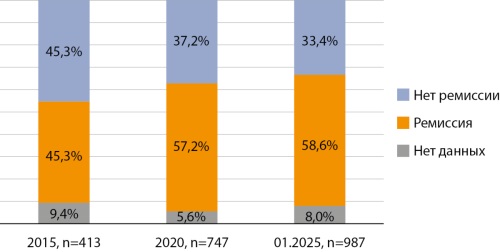
RESULTS. As of January 1, 2025, the OGGO database included 986 patients with CD. The average prevalence of CD in the Russian Federation was 0.7 per 100,000 population: the highest prevalence was observed in the Republic of Karelia (2.5/100,000), Chukotka Autonomous Okrug (2.1/100,000), and Tver Oblast (1.8/100,000). The sex ratio (m:f) was 152 (15.4%):834 (84.6%). The median age was 52 years [42.1; 63.6]. The median time from symptom onset to diagnosis was 22.2 months [4.1; 57.0]. At the time of the last visit, remission was achieved in 58.6% of patients.
CONCLUSIONS. The OGGO database is a valuable tool for monitoring and studying CD in Russia. The results confirm significant variability in the prevalence of CD in Russian Federation and the need for training and awareness-raising among physicians, which will contribute to improved diagnostics, reduced time to diagnosis, and optimized treatment.
BACKGROUND: Childhood overweight and obesity are associated with diseases in adulthood: metabolic syndrome, type 2 diabetes, coronary heart disease, hypertension, and some types of cancer. In 2006, WHO initiated the European Childhood Obesity Surveillance Initiative (COSI), according to which a survey of Moscow first-graders was conducted in 2017. The publications of the Initiative participants presented general characteristics of the Russian sample along with similar indicators of other countries participating in the Initiative, while the collected Russian data allow for a more detailed analysis.
AIM: To characterize the nutrition of 7-year-old children in Moscow at home and at school.
MATERIALS AND METHODS: The epidemiological study was conducted at the National Medical Research Center of Endocrinology of the Ministry of Health of the Russian Federation in 2017 as part of the COSI program. The study included 7-year-old children studying in one of the first grades of 68 randomly selected Moscow schools. The study was conducted in accordance with the COSI study protocol; parent and school questionnaire forms were filled in.
RESULTS: The study included 2,166 7-year-old children (1,068 boys and 1,098 girls). At home, 82% of children receive fresh fruit daily or 4–6 times a week, 72% receive vegetables, 64% receive dairy products, and 81% receive meat. 37% of children never receive soft drinks with added sugar, 62% — flavored milk, 79% — diet or "light" soft drinks, 55% — low-fat milk, and 29% — whole fat milk. 46% of children receive fish 1–3 times a week. At school, water is freely available for 86% of children, tea for 35%, fresh fruit for 67%, and vegetables for 55% of children. For 61% of children, a course on rational nutrition is conducted at school, or this topic is presented as a separate lesson, or is integrated into other educational activities. Two thirds of children at school are free from exposure to advertising and marketing.
CONCLUSION: For the first time, detailed results of an epidemiological study of 7-year-old children in Moscow under the COSI program are presented: assessment of the frequency of consumption of various food products at home and at school.
BACKGROUND: Obesity and hyperuricemia (HU) as metabolically and genetically similar conditions with a single list of comorbid diseases are of serious concern to the global scientific community.
AIM: to assess the incidence of GU and the severity of insulin resistance with different levels of fat content in comparison with BMI levels and obesity stages in working patients.
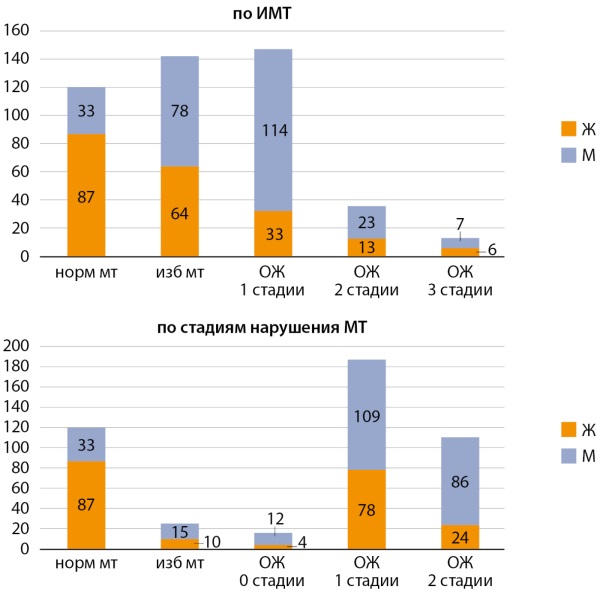
MATERIALS AND METHODS: A cross-sectional, single-center study included 458 working patients observed in the private healthcare institution "KB "RZhD-Medicine" in Yaroslavl. BMI, laboratory blood test results (glucose, uric acid, triglycerides, cholesterol, high-density lipoproteins), data on existing chronic diseases, and a photoplethysmographic marker of insulin resistance were recorded. The obesity stage was determined based on the presence/absence of fasting hyperglycemia, hypertriglyceridemia, decreased HDL-C, and comorbidity data. Statistical processing of the results was performed using the Statistica13 program.
RESULTS: Assessment of obesity by ABCD stages demonstrated the prevalence of metabolically unhealthy obesity (OB stages 1 and 2) in 64.8% of patients (OB1 — in 40.8% of subjects and OB 2 — 24.0%). HU occurs in metabolically unhealthy obesity more often at the second stage than at the first in men by 2.2 times, in women by 2.7 times, and relative to individuals with normal body weight, this ratio is 5.6 and 9.04 times. Photoplethysmographic marker of insulin resistance increased from the group with normal body weight to OB stage 2. Pathological level of photoplethysmographic marker of insulin resistance in men with OB stage 2 was detected more often by 1.4 times compared to OB 0 and by 2.25 times relative to OB stage 1, in women — by 2.2 and 2.1 times, respectively.
CONCLUSION: Metabolically neutral accumulation of fat mass (overweight and obesity stage 0) is very rare in the modern population of outpatient working patients (5.4–3.35%, respectively). Surrogate markers of insulin resistance are determined even with metabolically neutral variants of excess adipose tissue accumulation and reach a prevalence of more than 50% in stage 2 obesity. Hyperuricemia is practically not found in metabolically neutral variants of excess body fat and can act as a cheap routine marker of metabolic distress and a criterion for the effectiveness of preventive interventions.
BACKGROUND: Male hypogonadism is associated with obesity; therefore, it is of interest to evaluate the impact of bariatric surgery – one of the most effective methods for reducing adipose tissue mass on testosterone production.
AIM: Evaluation of the effect of bariatric surgery on testosterone production in men.
MATERIALS AND METHODS: A solid prospective observational single-center interventional study included men with obesity who underwent bariatric surgery at the National Medical Research Center for Endocrinology of the Ministry of Health of the Russian Federation between January 2022 and August 2024. Dynamic assessment of body weight, body mass index, and total testosterone levels was performed. Group comparisons were made using nonparametric methods. Differences were considered statistically significant at p < 0.05. The Bonferroni correction was applied for multiple comparisons.
RESULTS: A statistically significant reduction in body weight, amounting to -30.7 [-32.8; -27.2]% from baseline, was accompanied by a statistically significant increase in testosterone levels of 6.7 [4.2; 11.4] nmol/L. Hypogonadism was resolved in 56% (95% CI 31; 79) of men. Patients who achieved eugonadism had a statistically significantly higher baseline total testosterone level of 8.2 [7.3; 8.7] nmol/L compared to men with persistent hypogonadism — 5.5 [3.7; 6.5] nmol/L, p=0.005. There were no complications from bariatric surgery.
CONCLUSION: The use of bariatric surgery leads to increased testosterone production and reduced frequency of hypogonadism in men.
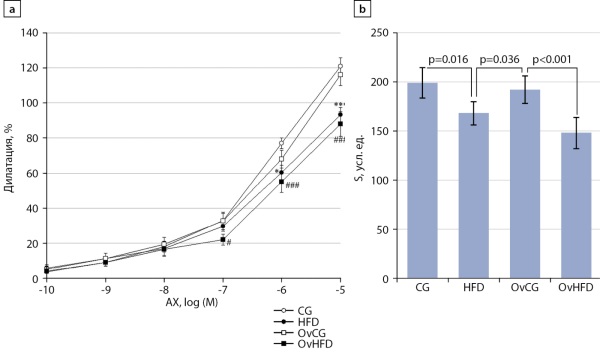
BACKGROUND. Changes in the human nutrition profile have led to excessive consumption of fats and carbohydrates, which is accompanied by the development of metabolic syndrome (MS). The main studies of the mechanisms of MS are performed on males, the features of MS in females have not been sufficiently studied.
OBJECTIVE. The objective was to assess the state of lipid and carbohydrate metabolism, the functional state of the mesenteric arteries in intact and ovariectomized female Wistar rats under a high-fat dietary load.
MATERIALS AND METHODS. Four groups of female rats were used: HFD (high fat diet, n=14), intact, receiving 50% fat in the diet, HFD (n=14) — ovariectomized, receiving 50% fat, CG (n=12) — intact, receiving a standard diet, OvCG (n=12) — ovariectomized, receiving a standard diet. After 10 weeks, the responses of mesenteric arteries precontracted with phenylephrine to acetylcholine (ACh) in the absence and with the use of an NO synthase blocker (L-NAME), as well as to sodium nitroprusside (NP), were studied using microphoto- and video recording of the vessel diameter in vivo. The state of carbohydrate and lipid metabolism, arterial pressure (BP), and the level of visceral obesity were assessed. The study refers to an interventional single-sample controlled study.
RESULTS. In the absence of differences in body weight in HFD and OvHFD rats, excess fat intake leads to visceral obesity, increased triglyceride and LDL levels, increased blood pressure, and insulin resistance compared to CG and OvCG. Evaluation of mesenteric artery dilation at an ACh concentration of 10–5 mol/L showed that in HFD females the relaxation amplitude was 19.9% lower than in CG, and in OvHFD it was 21.3% lower than in OvCG. Compared with the magnitude of dilation on ACh without blockers, pre-incubation of vessels with L-NAME led to a decrease in the amplitude of ACh-induced vascular relaxation in CG by 68.0±3.6%, in OvCG by 70.1±3.4%, in HFD by 48.4±2.9%, in OvHFD by 55.1±3.9%. NP-induced vasodilation was reduced in HFD rats by 32.3%, in OvHFD by 32.2% compared with CG and OvCG.
CONCLUSION. Excessive fat consumption by female rats is accompanied by visceral obesity, increased blood pressure, dyslipidemia, and impaired carbohydrate metabolism, dyslipidemia. The development of MS is accompanied by endothelial dysfunction, manifested by a decrease in ACh-induced dilation due to both the suppression of NO production by the endothelium and a decrease in the sensitivity of SMC to NO, while in ovariectomized females, visceral obesity without a decrease in vascular reactivity compared to intact animals.
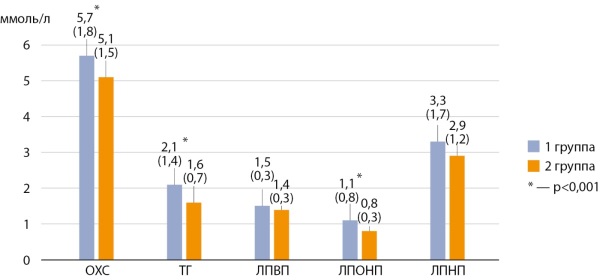
BACKGROUND: Androgen deficiency associated with type 2 diabetes mellitus (T2DM) is one of the components of the metabolic syndrome, which is followed by visceral obesity. The pathogenetic features of the functioning of adipose tissue in patients with a combination of pathologies such as T2DM and hypogonadism have been studied extremely little.
AIMS: To measure the effect of testosterone (T) deficiency on metabolic parameters and secretory activity of adipose tissue in men suffering from T2DM.
MATERIALS AND METHODS: Patients with T2DM and hypogonadism were subjected to a series of general clinical studies, studied the degree of disturbance of carbohydrate and lipid metabolism, as well as the lipid accumulation index LAP, and also the level of hormones produced by adipose tissue (resistin, adiponectin and leptin) and sex hormones.
RESULTS: The study involved 276 male patients with T2DM (aged 54.0 (8.0) years), divided into 2 groups: group 1 consisted of patients with hypogonadism (n=124); 2nd — eugonadal patients (n=152).
Along with insulin resistance, men suffering from T2DM in combination with hypogonadism have hyperinsulinemia and dyslipidemia, more significant disturbances in the secretory activity of adipose tissue: an increase in leptin concentration by 18.4% (p=0.03), resistin by 2 times (p < 0.001), and a 1.7-fold decrease in the level adiponectin (p=0.006). This pattern clearly demonstrates the fundamental importance T deficiency in men with T2DM in the formation of metabolic disorders, as well as dysfunction of adipose tissue.
CONCLUSIONS: Decreased T production in patients with T2DM worsens the disturbance of carbohydrate and lipid metabolism, and also the dysfunction of adipose tissue, the main pathophysiologic basis for cardiometabolic diseases.
BACKGROUND: Chronic hepatic insufficiency and liver cirrhosis (LC) are among the classic causes of various mineral disorders. For instance, the prevalence of osteoporosis in patients with LC reaches 12–55%, and up to 40% of patients with chronic liver disease (CLD) experience fractures of various locations. To date, data on mineral metabolism disorders and bone pathology (such as hepatic osteodystrophy, osteoporosis, vitamin D deficiency, secondary hyperparathyroidism, and hypocalcemia) in patients with chronic liver diseases remain limited, which complicates timely diagnosis and the selection of optimal pathogenetically targeted therapy.
AIM: To investigate the characteristics of mineral metabolism, particularly vitamin D metabolism, in patients with liver cirrhosis of various etiologies, and to identify diagnostically significant markers of mineral and bone metabolism disorders in this population.
MATERIALS AND METHODS: All study participants (patients with LC and healthy volunteers) underwent questionnaires, anthropometric measurements, and laboratory testing to assess mineral and bone metabolism status (including hormonal and biochemical parameters, and vitamin D metabolites, the concentrations of which were measured by tandem mass spectrometry). Bone mineral density (BMD) was assessed using X-ray osteodensitometry of the lumbar spine, proximal femur, and distal radius. Trabecular Bone Score (TBS) values were calculated, and screening for vertebral compression fractures was performed using X-ray imaging of the thoracic and lumbar spine in a lateral projection.
RESULTS: The study included 45 patients with LC and 20 volunteers who formed a comparison group (CG), matched by sex and age. In the LC group, statistically significant deviations in key mineral metabolism parameters were observed compared to the CG: decreased levels of total blood calcium (2.27 vs. 2.38 mmol/L, p < 0.001), ionized calcium (1.07 vs. 1.10 mmol/L, p=0.007), parathyroid hormone (26.0 vs. 36.4 pg/mL, p=0.009), and insulin-like growth factor-1 (91 vs. 152 ng/mL, p < 0.001). A pronounced deficiency of 25(OH)D (12.4 vs. 25.9 ng/mL, p < 0.001) and a reduced level of 24,25(OH)₂D₃ (0.6 vs. 1.5 ng/mL, p=0.001) were noted. Assessment of bone tissue revealed a significantly lower Trabecular Bone Score (TBS) in the LC group (1.370 vs. 1.498, p=0.001), while no differences in absolute BMD values were observed.
CONCLUSION: The study results confirm the presence of specific features of mineral metabolism in patients with LC: alterations in vitamin D metabolism, hypocalcemia, reduced PTH concentration, and impaired bone microarchitecture (decreased TBS) with preserved BMD. This highlights the need for comprehensive examination of patients with LC and further research on this issue.
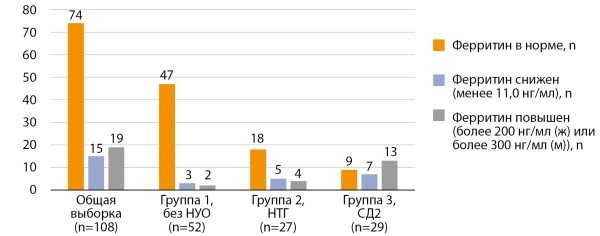
BACKGROUND: Diseases, which pathogenesis is based on iron overload - hereditary hemochromatosis, β-thalassemia, porphyria cutanea tarda - are associated with type 2 diabetes mellitus; this suggests the role of excess iron in the formation of carbohydrate metabolism disorders (CMD). The question of the possibility and informative content of using traditional ferrokinetics parameters as predictors and markers for diagnosing various CMD remains debatable.
AIM: To establish relationships between ferrokinetics markers and indicators of carbohydrate metabolism in overweight and obese individuals. The scientific hypothesis is that disturbances in ferrokinetics, such as dysmetabolic iron overload, influence the risk of induction and progression of CMD, regardless of body mass index.
MATERIALS AND METHODS: Patients underwent anthropometry, blood sampling with the determination of a detailed biochemical analysis, lipid spectrum analysis, a detailed general blood test and biochemical indicators of iron metabolism. Taking into account the technical capabilities of the device, a number of patients included in the study underwent T2*-magnetic resonance relaxometry of the liver.
RESULTS: The study included 108 patients, stratified into groups depending on the presence of CMD (without CMD, with impaired glucose tolerance (IGT) and with T2DM), as well as depending on the iron metabolism (with relatively high and relatively low ferritin levels). Ferritin levels were significantly higher in patients with T2DM than in patients with IGT (298.10 [145.80–336.95] and 124.00 [58.30–170.55] ng/ml, respectively, p=0.029) and persons without CMD (59.80 [24.10–108.85] ng/ml, p=0.002), and significantly higher in persons with IGT compared to patients without CMD (p=0.035). Patients with ferritin levels above the 75th percentile had higher glycated hemoglobin levels (HbA1c) (5.8 [5.3–6.6] and 5.4 [5.2–5.7]%, respectively, p=0.016). Ferritin was highly informative in the diagnosis of T2DM: sensitivity 77.8%, specificity 91% with a diagnostic threshold of 208.1 ng/ml (area under the curve = 0.813; p=0.002). In diagnosing IGT ferritin had a high sensitivity of 75% and specificity of 84.4%, but with a lower diagnostic threshold of 126.65 ng/ml (area under the curve = 0.738; p=0.016).
CONCLUSION: The level of hyperferritinemia increases as dysglycemia progresses. Ferritin is a promising marker that is highly informative in the diagnosis of various carbohydrate metabolism disorders.
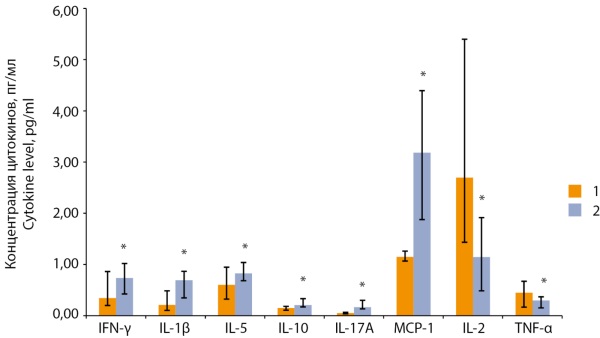
ВACKGROUND. Obesity and overweight occupy one of the leading places in the structure of morbidity in the population around the world. Of particular relevance is the task of developing effective methods for treating this pathology, including diet therapy using biologically active substances with antioxidant and anti-inflammatory properties.
AIM was to study the effect of capsaicinoids on the immune status in a model of nutritional obesity in rats.
MATERIALS AND METHODS. The study was carried out on male Wistar rats, which were randomized by body weight into 3 groups (10 animals each, initial body weight 350±10 g). The rats received a semisynthetic standard diet (group 1) and a high-calorie choline-deficient diet (HCChDD) (groups 2 and 3). Animals were intragastrically administered (3.33 ml/kg body weight) 3 times a week sunflower oil (groups 1 and 2) or hot pepper extract (capsaicin — 59%, dihydrocapsaicin — 31%, nordihydrocapsaicin — 4%) in sunflower oil (group 3) in a single dose of 15 mg capsaicinoids/kg body weight. Hematological studies were performed on a Coulter ACT TM 5 diff OV hematological analyzer (Beckman Coulter, USA). The study of the subpopulation composition of lymphocytes was carried out using a flow cytometer FC-500 (Beckman Coulter, USA). The content of cytokines in the blood plasma of rats was determined by multiplex immunoassay using a Luminex 200 analyzer (Luminex Corporation, USA).
RESULTS. In rats of the 2nd group, compared with the control, the presence of neutrophilic leukocytosis (1.20±0.13 vs 0.72±0.07 x10⁹/l; p < 0.05). A study of the subpopulation composition of lymphocytes in rats of the 2nd group revealed an increase in the relative content of T-helpers (61.41±1.31 vs 53.30±3.25%; p < 0.05) and the value of the immunoregulatory index (IRI): (1.94±0.15 vs 1.55±0.14; 0.05<p < 0.10) compared to the control group. Administration of capsaicinoids to rats of the 3rd group led to the normalization of these indicators. In animals of the 2nd group, a significant increase in the blood plasma levels of cytokines was found: IFN-γ, IL-1β, IL-5, IL-10, IL-17A, and MCP-1 and a decrease in the content of IL-2 and TNF-α according to compared with the control group. Capsaicinoids administered to rats of group 3 provided an increase (p < 0.05) in the levels of: IL-2, IL-4, IL-5, IL-6, IL-10, IL-17A, MIP-1α and TNF-α and a decrease (p < 0.05) in the content of IL-12(p70) and MIP-2 compared to groups 2 and 1. Due to this influence, the median ratio of the level of IL-10 to IL-12(p70) increased significantly (1.52 vs 0.29 and 0. 23), but the median IL-10/17A remained significantly lower than the control value (1.54 vs 3.07).
CONCLUSION. The anti-inflammatory effect of capsaicinoids in the extract of hot capsicum on nutritional obesity in rats has been established.
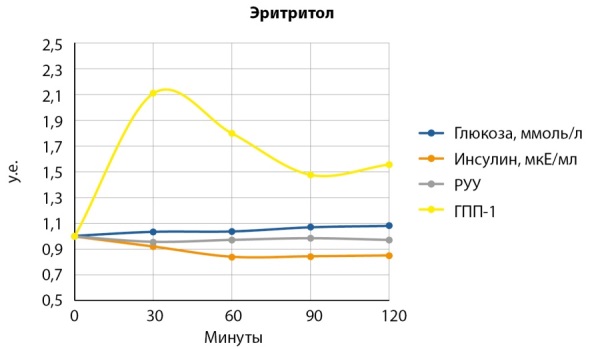
OBJECTIVE. To investigate postprandial secretion of insulin, peptide YY (PYY), and glucagon-like peptide-1 (GLP-1) following erythritol ingestion in patients with obesity, and to compare these responses with hormonal changes after sucrose intake and combined erythritol–sucrose administration.
MATERIALS AND METHODS. Adults aged 18–35 years with class I–II obesity (BMI 30–40 kg/m²) and without carbohydrate metabolism disorders were enrolled. Each participant completed three oral tests on separate days, receiving solutions containing either 75 g sucrose, 75 g erythritol, or 75 g sucrose plus 25 g erythritol, with washout intervals ≥48 hours. Plasma glucose, insulin, PYY, and GLP-1 were measured at baseline and at 30-, 60-, 90-, and 120-minutes post-ingestion. The protocol duplicated our prior study in healthy volunteers, enabling direct comparison of metabolic and incretin responses between the two populations.
RESULTS. Erythritol ingestion did not increase plasma glucose or insulin concentrations. Peak glucose after sucrose intake reached 7.55 [6.59; 8.07] mmol/L, compared with 7.20 [7.05; 7.66] mmol/L after the erythritol–sucrose mixture (p = 0.598). No increase in PYY was observed under any test condition. GLP-1 levels at 120 minutes were significantly higher after erythritol ingestion compared with sucrose (p=0.0017).
CONCLUSION. In patients with obesity, erythritol does not elevate plasma glucose or insulin levels but enhances GLP-1 secretion, which may contribute to improved satiety signaling and delayed gastric emptying. These data support erythritol as a safe and physiologically appropriate sugar substitute for individuals with obesity.
REVIEW
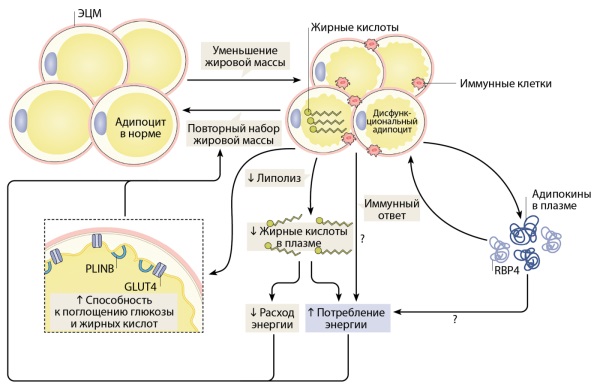
Obesity is a significant healthcare problem worldwide. It is associated with a multitude of comorbidities and significantly reduces the quality of life. Success in the study of the pathogenesis of metabolic disorders contribute to development and introduction of innovative technologies into the clinical practice to combat the epidemic of obesity. However, so far the mechanisms involved in weight regain remain not fully understood. Maintaining body weight is regulated by the interaction of many physiological processes. The purpose of this review is to analyze existing studies dedicated to the biological mechanisms leading weight regain after successful treatment of obesity.
CASE REPORTS
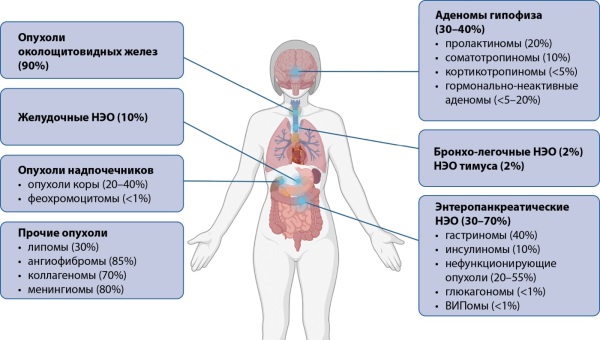
Multiple endocrine neoplasia type 1 (MEN-1) is a rare hereditary disorder characterized by the development of multifocal tumors in endocrine organs. This article presents a clinical case of a female patient with a confirmed MEN1 mutation (c.203delC p.T70fsX118), who exhibited manifestations of various syndrome components over more than 10 years, including parathyroid adenomas, pancreatic neuroendocrine tumors, and a pituitary microprolactinoma. The patient underwent multiple surgical interventions: duodenopancreatectomy, parathyroidectomy with autotransplantation, adrenal resection, and esophageal leiomyoma removal. The study discusses the challenges in diagnosing the primary source of parathyroid hormone secretion, the difficulties in achieving optimal glycemic control due to absolute insulin deficiency following fulminant diabetes mellitus development after total pancreatectomy, as well as aspects of reproductive health and quality of life. This case highlights the importance of a personalized approach and multidisciplinary management in patients with MEN-1 syndrome.
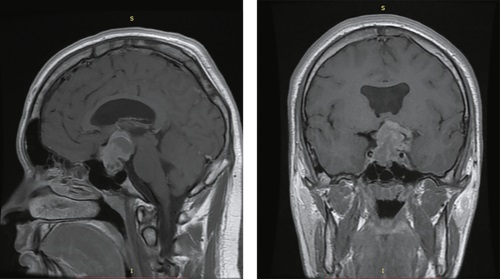
Acromegaly and gigantism are rare neuroendocrine diseases caused by excessive secretion of growth hormone (GH) and/ or high levels of insulin-like growth factor (IGF-1). Gigantism develops when excess GH or IGF-1 leads to accelerated linear growth before the completion of puberty and the closure of the epiphyses, most commonly caused by a somatotropic pituitary adenoma. The diagnosis of somatotropinoma in childhood is particularly challenging due to its subtle and nonspecific clinical presentation. Somatotropinomas at a young age are more often caused by genetic abnormalities and have a more aggressive course.
The article presents a clinical case of acrogigantism in a patient with two identified heterozygous variants in the PRKAR1A and SDHB genes. The scientific interest of the described observation is due to the debut of gigantism in childhood, complex pathogenetic treatment, as well as the experience of using the growth hormone receptor antagonist pegvisomant in a teenager in Russia.

This work is licensed under a Creative Commons Attribution-NonCommercial-NoDerivatives 4.0 International License (CC BY-NC-ND 4.0).
ISSN 2306-5524 (Online)





