


ANNIVERSARY

In the history and current status of Russian endocrinology, the personality of Academician Ivan Ivanovich Dedov occupies a special place. This article presents the unique contribution of the founder and President of the State Research Centre of the Russian Federation, the National Medical Research Centre for Endocrinology of the Ministry of Health of the Russian Federation (hereinafter referred to as the Endocrinology Research Center, ERC, Centre), the Chief External Endocrinologist of the USSR and the Russian Federation, Academician of the Russian Academy of Sciences I.I. Dedov, to the development of fundamental and clinical endocrinology, primarily in terms of providing high-quality specialized care to citizens with metabolic disorders of the endocrine glands (obesity and diabetes mellitus). The article was prepared as part of a historical and scientific research project dedicated to the 100th anniversary of the Endocrinology Research Centre, with a focus on the contributions of Academician I.I. Dedov as a world-class theoretical scientist, talented clinician, and effective healthcare organizer and manager.
ORIGINAL STUDIES

BACKGROUND: Obesity is considered one of the leading global health issues. According to a meta-analysis published in the Lancet, in 2024 there were 880 million adults and 159 million children with obesity worldwide. Surgical treatment is one of the main methods for managing morbid obesity. There are several options for surgical treatment, but mini-gastric bypass is gaining popularity among bariatric surgeries. The operation is considered effective in reducing body mass and achieving remission of obesity-related comorbidities. The main advantage of this type of surgical intervention is the combination of relative simplicity and safety of the operation compared to other shunting bariatric interventions with sufficient efficacy on the course of type 2 diabetes mellitus. Despite the advantages of this technique, there is limited research published in this area.
AIM: Assess the long-term outcomes of mini-gastric bypass in patients with morbid obesity.
MATERIALS AND METHODS: The study presents the results of a 2-year follow-up of 30 patients who underwent mini-gastric bypass surgery. The patients' average age was 52.5 [50–56.5] years, and their preoperative BMI was 50.0 kg/m2 [46.2–59.6]. Follow-up assessments were conducted at 6, 12, 18, and 24 months over a two-year period post-surgery. During the observation period, anthropometric data (BMI, waist circumference, hip circumference, excess weight loss percentage — EWL, total weight loss percentage — TWL), fasting blood glucose level, glycated hemoglobin (HbA1c), and postoperative adverse events were evaluated. RESULTS: After two years post-surgery, the median BMI value was 33.6 kg/m2 [28.4–36.5] (p<0.001) with an excess weight loss of 33.6% [28.4–36.4] (p<0.001). The greatest excess weight loss of 35.6% [26.6–54.2] (p<0.001) and 56.0% [39.0–56.0] (p<0.001) was observed at 6 and 12 months of the study, respectively. Similar results were also noted for other parameters. During the study period, remission of type 2 diabetes was achieved in 40% of patients (n=12) at 12 months of observation and in 80% of patients (n=24) at 24 months of observation. A significant reduction in adverse events was observed in the second year of the study compared to the first year.
CONCLUSION: Therefore, mini-gastric bypass surgery is an effective bariatric procedure that leads to weight loss and remission of type 2 diabetes.
Hypogonadism syndrome in men is a symptom complex of clinical and/or hormonal changes associated with a deficiency of sex hormones. The hypothalamic-pituitary-gonadal axis plays an important role in many processes, which is associated with both the development, maturation, and aging of the male body. With the help of this axis, there is a consistent relationship of processes aimed at maintaining the endocrine function of the testicles, ensuring the production of testosterone by the gonads, as well as ensuring the exocrine function associated with the formation of spermatozoa. Under the influence of a variety of both exogenous and endogenous factors, there is a gradual decrease in testosterone levels, which subsequently leads to the development of hypogonadism. Testosterone deficiency is a fairly common problem in men. Often, low androgen levels are not taken seriously at the primary level, and in some cases by specialized specialists, especially in older men. But it should be noted that not all patients present characteristic complaints, probably not giving them due importance. The combination of these factors indicates low awareness among both medical professionals and patients. Given the combination of various aspects that influence the formation of hypogonadism, in this article we consider the combination of type 2 diabetes in men with a history of long-term work experience in an industrial environment.
BACKGROUND: Hypogonadism plays an important role in the course of somatic diseases. Harmful working conditions in combination with type 2 diabetes mellitus (DM 2) have a mutually potentiated effect in the formation of androgen deficiency, which in the long run leads to sexual and reproductive dysfunction and early loss of working capacity and disability in the male population of our country.
AIM: The goal is to determine the frequency of testosterone deficiency (TD) in long-term exposure to industrial vibration in men with type 2 diabetes.
MATERIALS AND METHODS: In the period from 06.2024 to 06.2025, a one-stage, non-interventional, single-center screening study was conducted in the endocrinology department of the City Clinical Polyclinic No. 8 in Chelyabinsk, involving 896 men with type 2 diabetes. These included employees from steel, defense, and engineering industries. The patients were aged between 40 and 70 years. The participants were divided into two groups. The first group consisted of individuals who had never worked in hazardous production conditions (SD, n=88). The second group included individuals with a confirmed diagnosis of vibration disease (VD), with an average work experience in hazardous industries of 23 years [16.0; 31.0] years of SD 2 and vibration disease (SDVBD, n=96). Both groups had a duration of SD 2 disease of more than 10 years.
RESULTS: As a result of statistical processing of the initial data, the parameters of carbohydrate metabolism in the form of glycated hemoglobin were 7.70 [6.90; 8.60] in the DM group versus the ADHD group 7.85 [7.30; 8.80] (p=0.100), as well as glucose 8.10 mmol/l [7.10; 9.88] in DM and 8.93 mmol/l [7.24; 11.6] in the ADHD group (p=0.151), there were no significantly significant differences. Clinical and laboratory indicators of androgenic status, on the contrary, showed statistically significant changes, testosterone (T) in the DM group was 15.3 [9.66; 22.7] nmol/l versus 9.25 [6.26; 15.7] nmol/l in the ADHD group (p< 0.001). Thus, the industrial vibration potentiated the DT in the SDB group.
CONCLUSION: Industrial vibration in combination with SD 2 contributes to the formation of DT, which is confirmed by clinical and laboratory data in the SDVB group.
REVIEWS
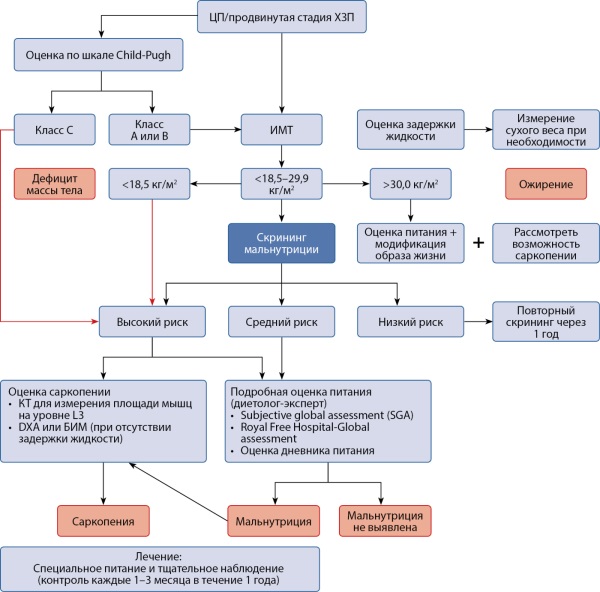
Disorders of mineral metabolism are one of the most significant healthcare challenges in Russia and worldwide. Pathogenetically, they can be caused by various pathologies, including chronic liver diseases (CLD). Mineral metabolism disorders in CLD include hepatic osteodystrophy, osteoporosis, vitamin D deficiency, secondary hyperparathyroidism, hypocalcemia, and others. These disorders are highly prevalent in this patient cohort; however, the lack of unified comprehensive clinical guidelines hinders the timely detection of these complications of CLD. In the first part of the review, we examined the epidemiology and pathophysiology of mineral metabolism disorders in CLD, while the second part focuses on their diagnosis.

This work is licensed under a Creative Commons Attribution-NonCommercial-NoDerivatives 4.0 International License (CC BY-NC-ND 4.0).
ISSN 2306-5524 (Online)





