


Obesity and metabolism
Peer-reviewed medical journal that publishes articles on the problems of obesity, metabolic disorders, and endocrine diseases.
Editor-in-chief
Ivan I. Dedov, President of Endocrinology Research Centre, MD, PhD, Professor
ORCID: https://orcid.org/0000-0002-8175-7886
Journal founders
- Endocrinology Research Centre (https://www.endocrincentr.ru/)
- Russian Association of Endocrinologists (https://rae-org.ru/)
About
"Obesity and metabolism" is a multidisciplinary forum for clinical and applied research in the field of biochemistry, physiology, pathophysiology, genetics, nutrition, as well as molecular, metabolic, psychological, and epidemiological aspects of obesity and metabolism. The main subject "Metabolism" reviewed in the journal, includes fat, carbohydrate, protein, bone, fluid and electrolyte, and other types of metabolism in the spectrum of pathology of the endocrine system.
Publication frequency
| Language
|
Distribution
- Gold Open Access, under the Creative Commons Attribution-NonCommercial-NoDerivatives 4.0 International License (CC BY-NC-ND 4.0).
Indexing
|
|
APC
- The journal doesn't have any Article-processing charges or article submission charges.
Current issue

ORIGINAL STUDIES
BACKGROUND: Being an indication for androgen replacement therapy, male hypogonadism is often associated with obesity. Therefore, assessing the impact of testosterone replacement therapy (TRT) on obesity is relevant.
AIMS: To evaluate the impact of transdermal TRT on obesity and quality of life (QOL) in males with hypogonadism.
MATERIALS AND METHODS: A comparative, randomized, prospective study enrolled 156 hypogonadal and obese males aged 39 [34; 44] years (the comparison group had no concurrent intervention). Study participants were randomly assigned 1 of the 2 groups by matching appropriate pairs. Group 1 consisted of males receiving transdermal TRT, while Group 2 consisted of patients not receiving androgen therapy but undergoing obesity treatment through diet and lifestyle modification. The observation period was 12 months. A retrospective comparison was also performed on patient subgroups within Group 2, based on whether their hypogonadism was eliminated or persisted. The procedures included collecting patient anamnesis, conducting a physical examination to determine body mass index, administering a questionnaire regarding androgen deficiency symptoms, and assessing total testosterone levels. The Mann–Whitney U-test, Wilcoxon test, and χ² with Yates' correction were employed for group comparisons. A p-value below 0.05 was deemed statistically significant. Multiple comparisons were adjusted using the Bonferroni correction.
RESULTS: The groups were comparable regarding the parameters examined at the study's outset. Most of the parameters observed showed statistically significant alterations in both groups 1 and 2, except for hematocrit and hemoglobin levels in group 2. Patients receiving TRT after 12 months from their inclusion into the study had a statistically significantly higher level of total testosterone and lesser severity of androgen deficiency symptoms. When assessing the magnitude of changes in the studied parameters, it was found that patients receiving TRT were characterized by a statistically significantly more pronounced decrease in body weight (mean difference -4.0% (95% CI -5.2; -2.7, р<0,001), a decrease in waist circumference, as well as the severity of androgen deficiency symptoms. In the group of males not receiving TRT, but undergoing obesity treatment through diet and lifestyle modification, 12 months following the commencement of the study, 31 men showed resolution of hypogonadism. Hematocrit elevations above the reference value (>50%) were observed in 23% of men on TRT and 12% of patients without hypogonadism therapy, p=0.098 (χ² with Yates' correction). Hemoglobin elevations above the reference value (>160 g/L) were detected in 37% and 15% of males on TRT and without hypogonadism therapy, respectively (p=0.003; χ² with Yates' correction). No increases in hematocrit or hemoglobin levels requiring discontinuation of TRT were observed.
CONCLUSIONS: Treatment of hypogonadism using TRT has a positive effect on weight loss in obese males. Furthermore, normalization of testosterone levels leads to a reduction in androgen deficiency symptoms, accompanied by an improvement in quality of life (QOL). Hypogonadism cessation with obesity treatment alone (without the use of TRT) is possible in 41% (95% CI 30.1-53.3) of cases, provided clinically significant weight loss is achieved. Since most respondents achieved normalization of total testosterone levels within the first 6 months, this allows timely initiation of TRT to those patients who have not achieved stable normalization of total testosterone levels within a specified time.
BACKGROUND: Binge eating disorder (BED) is the most prevalent eating disorder manifesting as episodes with higher than usual food intake uncontrolled by patients. Nutritional specifics, their associations with biological and psychological parameters in Type 2 diabetes mellitus (T2DM) with BED have not been studied.
AIM: To identify specific characteristics of nutrition (food choices, food planning, diet barriers [DB]) in T2DM patients with and without BED, their associations with clinical, laboratory, and psychological parameters and their changes over time under treatment of BED.
MATERIAL AND METHODS: T2DM patients with and without BED participated in this cross-sectional study. In those with and without BED, we compared the characteristics of nutritional style, clinical, laboratory and psychological parameters (depression, anxiety/anxiousness, some personality characteristics, including alexithymia, and diabetes-dependent quality of life (Qol). In subsequent prospective open-label interventional part of the study, we evaluated changes of the nutrition characteristics in T2DM patients with BED under treatment with glucagon-like peptide I receptor agonists (GLP1-RA) versus no BED treatment. The univariate analysis was performed at α=0,05, logistic regression at α=0,10.
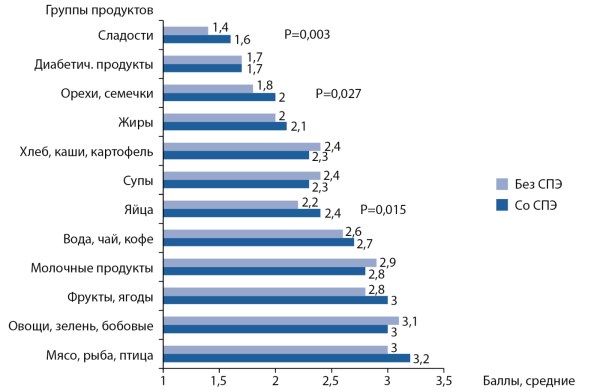
RESULTS: The study recruited 273 T2DM patients (176 with and 97 without BED). The BED patients ate less frequently than those without: minimal number of daily food intakes 2,6±1,1 and 2,9±0,8, respectively (р=0,010), food intake skipped 1,5±1,8 and 0,8±1,5 weekly (р=0,001). Compared to no-BED patients, those with BED consumed more sweets (р=0,003), “hidden” fats (eggs, р=0,015; nuts, р=0,027), and alcoholic drinks (р=0,004). In the BED group, there were 23 associations between various foods and clinical and laboratory parameters (9 of them indicated favorable and 14 unfavorable food effects). In the non-BED group, 6 associations were found, all them indicating favorable food effects. In both groups, the most significant DB was “difficult to withdraw sweets”. The BED-specific weighted DB were: “difficult to stick to a diet in unexpected situations”, “when I eat more than allowed, I feel bad”, “sometimes I am not allowed to eat being hungry”, and “I would like to eat foods that I should not eat”. Only in the BED group, there were weak but significant correlations between DB numbers/patient and metabolic parameters: НbA1c (r=0,210, р<0,010), serum insulin level (r=0,171, р<0,05), HOMA insulin resistance index (r=0,286, р<0,010), and triglyceride levels (r=0,183, р=0,026). In both groups, DB numbers correlated to higher scores of somatic complaints, alexithymia, depression, psychopathic deviate, paranoia, autism, social introversion, and poorer diabetes-dependent QoL. Logistic regression showed associations of BED to alcoholic intake (odds ratio [OR] 1,03, 95% CI 1,001–1,058, р=0,044), DB domain “limited food diversity” (OR 1,51; 1,172–1,946, р=0,001), food planning (OR 0,154, 0,054–0,442, р=0,001), DB domain “additional food-related costs” (OR 0,49, 0,304–0,792, р=0,004), and high-fiber foods consumption (OR 0,58, 0,324–1,026, р=0,061).
In the second 6-month study period with 66/176 BED patients, 33 of them were prescribed GLP1-RAs and 33 continued their previous therapy. In both groups, food choices remained unchanged qualitatively. Under treatment with GLP1-RA, there was statistically significant (but not clinically meaningful) decrease in DB domains “limited foods choices” and “limited foods diversity”, while in the control group, a decrease in “limited foods choices” score and an increase in “additional food-related costs” were found.
CONCLUSION: Specific characteristics of nutrition in T2DM patients with BED (less regular food intake, higher intake of unhealthy products and higher numbers of DB, compared to those in T2DM without BED) may negatively affect clinical, laboratory and psychological parameters. Three factors related to nutrition style are associated with increased BED risk and three, with lower risk. The results necessitate a personalized dietary approach to T2DM patients with BED, which requires its timely diagnosis made in primary and secondary care. GLP1-RAs exert no clinically valuable effects on the studied nutrition characteristics in BED patients with T2DM.
BACKGROUND: Lifestyle influences the risk of childhood obesity. Long-term use of glucocorticoids (GCS) for treatment of chronic autoimmune and inflammatory diseases in children leads to development of obesity with Cushing redistribution of subcutaneous fat; spontaneous weight normalization is expected after dose reduction or discontinuation of GCS. However, in some cases obesity persists.
AIM: To study the lifestyle characteristics of children with weight gain during GCS therapy compared to children with simple obesity (SO)
MATERIALS AND METHODS: We compared the results of a questionnaire-based survey of children treated with GCS in 09.2017-03.2018 and the previous survey of patients with SO in 2015. We analyzed the follow-up of patients treated with GCS.
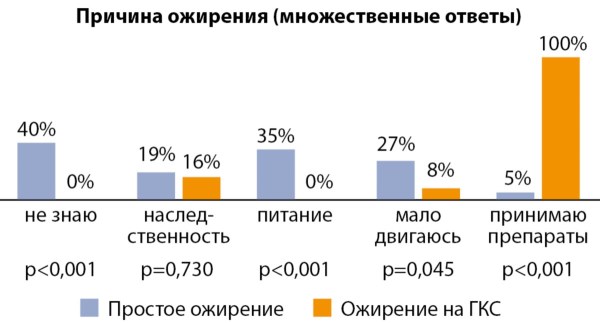
RESULTS: 25 patients (14 girls, 11 boys; 12.1 (9.4; 15.3) years) taking GCS at a maximum dose of 1.00 (0.50; 1.00) mg/kg/day, compared with 100 patients (43 girls, 57 boys; 13.4 (10.5; 15.7) years) with SO were characterized by significantly more sedentary lifestyle, adherence to breakfast and snacks. BMI SDS after 7.8 (3.2; 9.6) years of therapy correlated with BMI SDS before treatment and while maximum GCS dose treatment (p<0.01), but not with the value of maintenance dose of GCS (0.09 (0.00; 0.16) mg/kg/day). Persistence of obesity after reduction of the GCS dose was associated with the absence of any physical activity — OR 3.5 (95% CI 0.460–26.617).
CONCLUSION: Most children with chronic autoimmune and inflammatory diseases treated with GCS have a sedentary lifestyle, which is a risk factor for the persistence of obesity after reducing the dose of GCS.
BACKGROUND: Dyslipidemias occupy one of the leading places among modified risk factors for cardiovascular pathologies.
AIM: Evaluation of the blood lipid spectrum in men under unfavorable working conditions in various climatic zones of the Krasnoyarsk Territory.
MATERIALS AND METHODS: Blood parameters were assessed in the Arctic (n=60), Subarctic (n=60), and temperate zones (n=60): triglycerides, total cholesterol, and highand low-density lipoproteins. Dyslipidemia types were determined: predominant triglyceridemia and hypercholesterolemia, mixed hyperlipidemia, and atherogenic hyperlipidemia. Age, total work experience, length of service in the North, nutritional status, and working conditions based on hazards were assessed. RESULTS: Conditions in the Arctic are of an organized team, in the Subarctic and temperate zone they are normal. Age is 35.7±3.4, 34.2±5.5 and 32.9±3.3 years without statistically significant differences, as well as the length of work experience: up to 40 years, 65.0%, 79.6% and 70.7%, respectively. Work experience in the North is 7.1±0.8 and 6.4±3.5 (p=0.450) years. The work is harmful: 3.3 (Arctic severity and intensity of work), 3.2 (Subarctic, temperate zone intensity of work). In the Arctic, hypercholesterolemia is in 43.1%, mixed in 41.2%, atherogenic dyslipidemia in 11.8%; In the Subarctic, hypercholesterolemia is found in 36.7%, mixed in 10.0%, atherogenic in 43.3%; in the temperate zone, hypercholesterolemia is found in 58.5%, mixed in 18.9%, atherogenic in 17.0%, and triglyceridemia in 1.9%.
CONCLUSION: Dyslipidemia is more pronounced with the combined effect of living conditions, low physical activity and intense mental work in the Subarctic. With mental work and physical exertion in the Arctic, the adaptive capabilities of the body are higher, which is confirmed by high high-density lipoproteins in 58.9%, as well as a smaller proportion of people with atherogenic dyslipidemia. The need to assess the lipid spectrum of the blood under unfavorable living and working conditions, regardless of age, and differentiated measures to prevent dyslipidemia has been established.
BACKGROUND: Adipose tissue (AT) is an active endocrine organ that produces biologically active molecules — adipokines, which participate in lipid and glucose metabolism. The imbalance of adipokine secretion in obesity is a consequence of AT dysfunction, which at the molecular genetic level is manifested as changes in the expression of the key genes, and can be complicated by the development of metabolic disorders, in particular type 2 diabetes mellitus (T2DM).
AIM: The aim of this study was to investigate the expression level of PPARG, ADIPOQ, LEP, SLC2A4 genes in subcutaneous and visceral adipose tissue (SAT and VAT) in bariatric patients with obesity and T2DM, as well as to assess the correlation of adiponectin and leptin serum concentrations with the expression of corresponding genes.
MATERIALS AND METHODS: The single-center, cross-sectional, two-sample, comparative, observational case-control study included patients with grade II, III, IV obesity with/without T2DM, as well as non-obese individuals who applied to the Pavlov First Saint Petersburg State Medical University for bariatric (patients) and planned abdominal surgeries (control group), SAT and VAT samples, as well as blood serum, were collected. Real-time polymerase chain reaction was used to determine the mRNA levels of target genes in AT. Adiponectin and leptin serum concentrations were assesed by enzyme immunoassay.
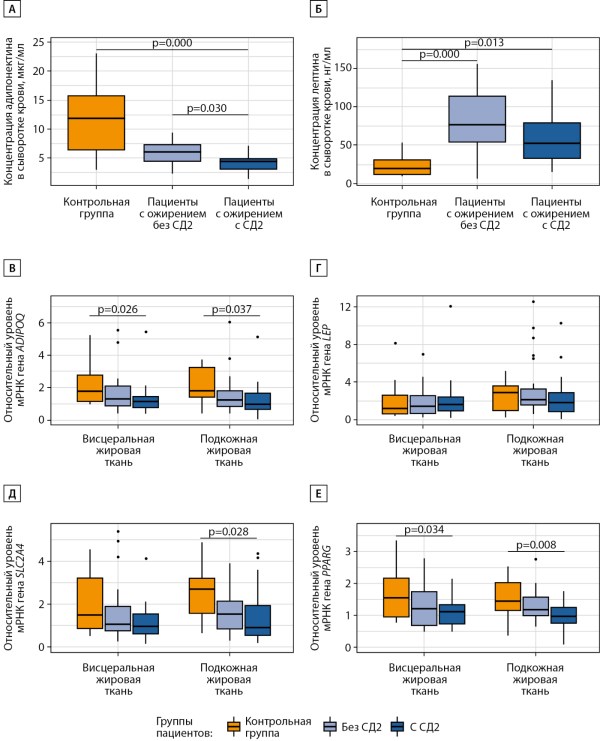
RESULTS: The group of bariatric patients included 53 patients (mean age 44.1±11.2 years; body mass index (BMI) over 35 kg/m2), including 26 patients with a diagnosis of T2DM and 27 without T2DM. The control group included 15 individuals without obesity, metabolic disorders and T2DM (mean age 46.7±12.8; BMI less than 30 kg/m2). In patients with obesity and T2DM, a decrease in the level of PPARG, ADIPOQ and SLC2A4 gene expression in SAT was observed compared to the control group. The level of PPARG and ADIPOQ gene expression was also reduced in VAT in patients with obesity and T2DM compared to the control group. The observed changes in gene expression in obesity were associated with a decrease in adiponectin and an increase in leptin serum concentrations, with the most pronounced decrease in adiponectin concentration in patients with obesity and T2DM. Unidirectional positive correlations were observed in the expression levels of PPARG, ADIPOQ, LEP, SLC2A4 genes in SAT and VAT in the total cohort.
CONCLUSION: The development of T2DM on the basis of obesity and BMI of more than 35 kg/m2 is associated with reduced expression levels of the PPARG, ADIPOQ and SLC2A4 genes in SAT, a marked decrease in the concentration of adiponectin and an increase in the concentration of leptin in the blood serum.
BACKGROUND: Bariatric surgery is the most effective treatment for morbid obesity and type 2 diabetes. Hypercortisolism in patients undergoing bariatric surgery may reduce the effectiveness of surgery and increase the risk of complications.
AIM: To assess the prevalence and clinical forms of hypercortisolism in patients with morbid obesity and type 2 diabetes mellitus undergoing examination before bariatric interventions.
MATERIALS AND METHODS: Screening for Cushing's syndrome was performed in patients with morbid obesity and type 2 diabetes mellitus referred to the clinic for examination before bariatric surgery. The overnight dexamethasone suppressive test with 1 mg dexamethasone (1-mg DST) was used as a first-line test. Additional tests included 24-hour urinary free cortisol excretion and evening cortisol level in saliva or blood serum. In case of pathological results of the second-line tests, the ACTH level was measured, and suppressive test with 8 mg dexamethasone was performed.
RESULTS: The study included 91 patients, 21 men and 70 women, aged 27 to 66 years. A decrease in the cortisol level <50 nmol/l in the 1-mg DST was recorded in 75 patients. In the remaining subjects, the cortisol concentration exceeded the cutoff point, which required further tests. In 14 patients (15.4%) with functional hypercortisolism (pseudo-Cushing`s syndrome), the cortisol level in 1-mg DST ranged from 50 to 140 nmol/l (median 67.7). In three women, the cortisol level in the 1-mg DST demonstrated very high values (593, 461 and 425 nmol/l). During further examination, pituitary adenomas were verified in two of them, and the third woman was diagnosed with adenomas in both adrenal glands.
CONCLUSION: The obtained results confirm the need for screening for hypercortisolism in all patients with morbid obesity and type 2 diabetes scheduled for bariatric surgery.
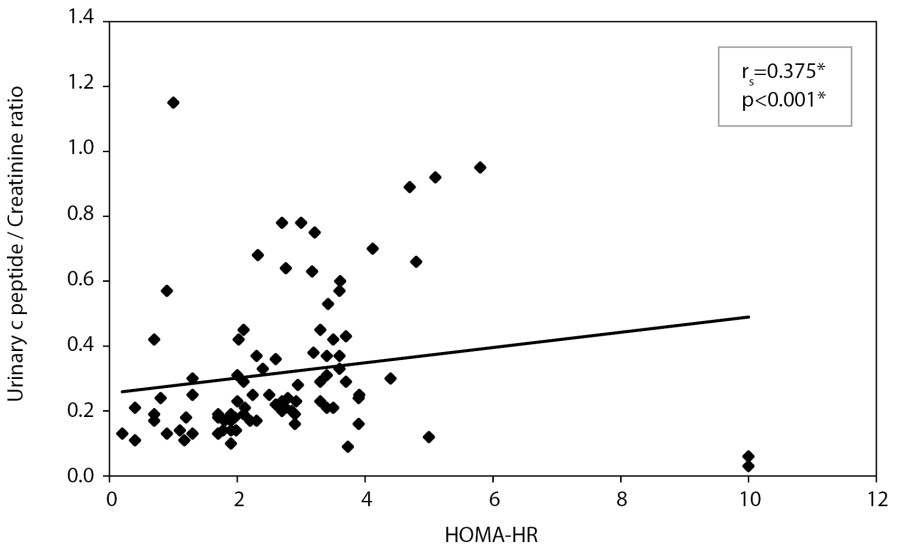
BACKGROUND. Insulin resistance (IR) is considered the main mechanism of type 2 diabetes (T2DM). Diabetic vascular complications (DVC) are main causes of morbidity and mortality. Urinary c-peptide to creatinine ratio (UCPCR) is a novel promising biomarker that may be of value in assessment of IR and DVC.
AIM. The present work aimed at studying the relation between UCPCR, IR and DVC in subjects with T2DM.
MATERIALS AND METHODS. This was a cross-sectional study performed on a group of subjects with T2DM. Insulin resistance was assessed by measuring homeostasis model assessment for insulin resistance (HOMA-IR). Laboratory investigations included glycemic parameters and renal functions. Human C-peptide ELISA kit was used to asses c-peptide level in a spot urine sample after processing.
RESULTS. The study included 90 subjects with T2DM. There was highly statistically significant positive correlations between UCPCR and HOMA-IR, FPG and HbA1c with P values of <0.001, 0.006 and 0.005 respectively. FPG, HbA1c, and UCPCR were the independent risk factors for IR in the univariate regression analysis. However, UCPCR was the only independent risk factor for IR in multivariate analysis (OR 16.431(1.401–192.706). UCPCR cut-off value (>0.19) nmol/mmol was able to differentiate significantly (p<0.001) between patients with IR and those without IR with good sensitivity, specificity and AUC (85.11%, 60.47% and 0.716 respectively).
CONCLUSION. In patients with T2DM, UCPCR could be used as a simple, noninvasive and available biomarker for IR. It also could be used as a marker of glycemic control. However, UCPCR is not related to DVC.
BACKGROUND. Eating foods with a high sugar content causes changes in the functioning of the cerebral systems, involving hedonic and homeostatic mechanisms, which may be one of the mechanisms for the formation of increased cravings for sweet foods, weight gain and the development of metabolic disorders. Low-calorie sweeteners are widely used as an alternative to sucrose. Changes in the activity of brain areas when using various low-calorie sweeteners that stimulate sweet taste receptors are poorly understood.
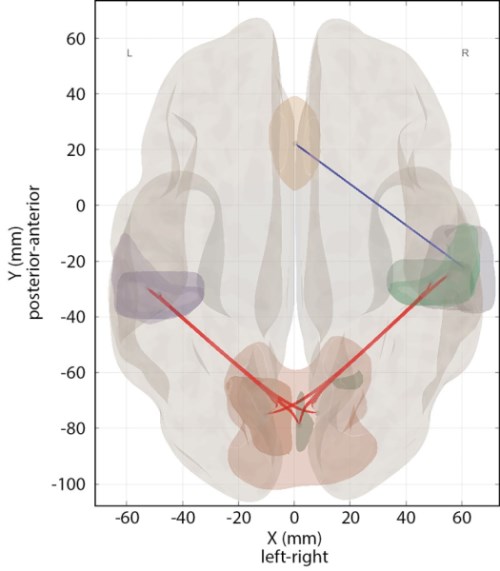
AIM. To study the features of functional activity of various brain regions in healthy volunteers using functional magnetic resonance imaging (fMRI) when consuming sugar and the low-calorie sweetener Erythritol (E968).
MATERIALS AND METHODS. The study included 12 volunteers with a normal body weight (BMI) <25 kg/m2). The study was performed on a Siemens Magnetom Prisma 3.0T MR tomograph. The MRI examination protocol included sequences for obtaining T2-weighted images and three-dimensional T1-weighted images to exclude structural pathology of the brain and obtain anatomical data, as well as a sequence for obtaining resting fMRI data.
RESULTS. The median age of the subjects was 25 years [24; 26]; the median BMI was 22.5 [20; 24.8]. According to fMRI data, when taking sugar, connections between the temporal zones and the visual cortex are activated, which may reflect enhanced sensory integration and motivational processing of food reward. The sweetener has an effect on functional connectivity; the connection between the structures of the cerebellum, parietal cortex and insular cortex is specifically weakened, which can be interpreted as a decrease in the involvement of integrative sensory-motivational networks active on an empty stomach.
CONCLUSION. A dynamic study of brain activity using fMRI showed a different pattern of activation of brain areas when consuming sugar and sweetener.
REVIEWS
Arterial hypertension is the leading modifiable risk factor for cardiovascular morbidity, and lifestyle and diet play an important role both in the pathogenesis of hypertension and in the development of concomitant metabolic disorders, including atherosclerosis, obesity, and type 2 diabetes mellitus. The nature of nutrition and the development of hypertension with metabolic disorders are largely related to the intestinal microbiota, the products of its metabolism and low-intensity non-septic endotoxemia, which can develop as a background condition. Conscious manipulation of the composition and metabolites of the intestinal microbiota and intestinal wall permeability through dietary strategies can be considered as one of the approaches in the prevention and treatment of hypertension and metabolic disorders. The aim of the review was to search, summarize and discuss real literature data on the role of intestinal microbiota and endotoxemia in the pathogenesis of the development of arterial hypertension and the atherosclerotic process, as well as to systematize data on the effect of diet on intestinal microbiota in individuals of this category. Materials and methods: the search and selection of literary sources was carried out in systemic studies in the scientific databases cyberleninka.ru, elibrary.ru, link.springer.com, frontiersin. org, pubmed.ncbi.nlm.nih.gov, Web of Science, Google Scholar and others.
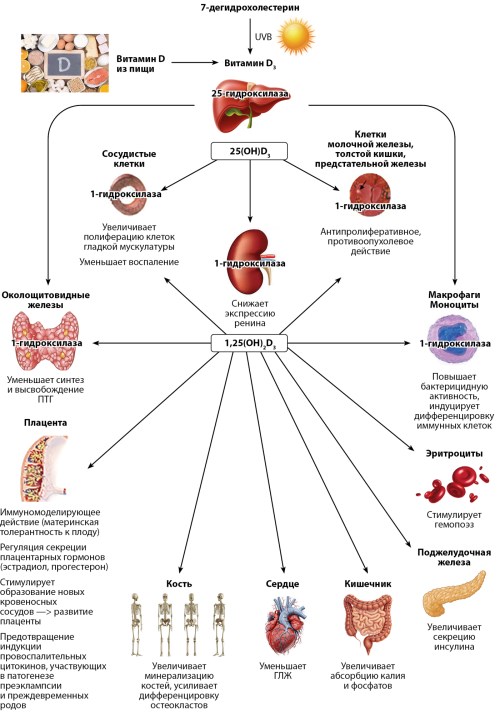
Vitamin D supplementation has a significant positive effect on the skeletal system (prevention of rickets/osteomalacia; in severe deficiency, reduction in the risk of certain fractures and falls). However, for extraskeletal effects, which include acute respiratory infections, cardiovascular diseases, cancer, type 2 diabetes, and obesity, the data are mixed. Large randomized clinical trials in non-selected populations have generally failed to confirm a significant clinical benefit from vitamin D supplementation, while meta-analytic and subgroup data indicate a significant benefit in individuals with corrected baseline deficiency. Dosage regimen and baseline 25(OH)D status are key effect modifiers. Therefore, experts currently recommend a targeted approach screening and correcting deficiency and insufficiency in at-risk groups, achieving and maintaining target vitamin D levels. This literature review focuses on the effects of vitamin D supplementation in patients with obesity and carbohydrate metabolism disorders.
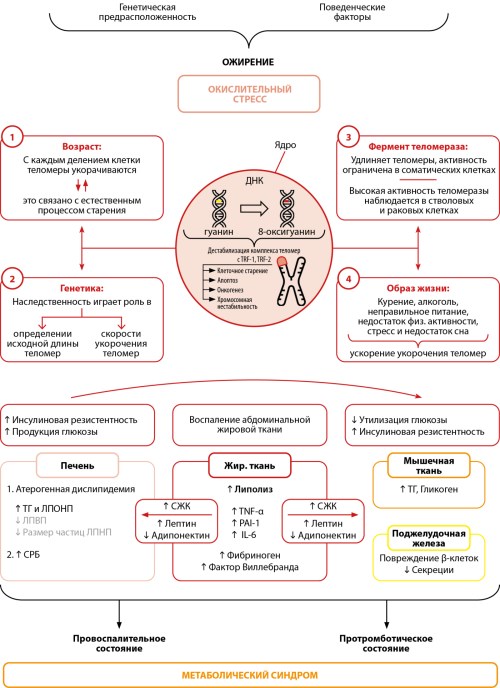
Metabolic syndrome is a common pathophysiological complex of metabolic disorder, which is characterized by a central type of obesity, arterial hypertension, hyperglycemia, hyperinsulinemia, decreased sensitivity of peripheral tissues to insulin. This symptom complex is also associated with atherogenic dyslipidemia, which is characterized by increased triglyceride levels, decreased high-density lipoprotein (HDL) levels, and increased cholesterol levels. It should be noted that metabolic syndrome has become one of the main public health problems around the world and attracts the interesting of researchers in this area. There are a large number of directions for studying this pathophysiological complex, one of which is the dependence of metabolic syndrome development on the length of chromosome telomeres. Analysis of scientific literature over the past 6 years showed that most authors agree that there is a positive correlation between the development of metabolic syndrome and its components, including oxidative stress as a key pathogenic factor, and changes in the length of chromosome telomeres, suggesting that this parameter could be used as a potential biomarker for the development of metabolic syndrome.
Diabetes mellitus is one of the most pressing problems of modern medicine, characterized by high morbidity (with continuous growth), a decrease in the duration and quality of life, numerous and severe complications. Among the disorders observed in diabetes mellitus, the insufficiency of angiogenesis, the process of formation of new vessels from existing ones, is noted. This process plays an important role in reparative regeneration, ensuring the formation of granulation tissue. The insufficiency of angiogenesis in diabetes mellitus causes a decrease in the rate and quality of wound healing in such patients. We conducted a literature review with the following objectives: to collect up-to-date data on the mechanisms of angiogenesis and its regulation, to identify the links of angiogenesis that are subject to the pathological influence of diabetes mellitus; and to identify potential targets of pharmacological therapy that can compensate for this effect. The results of this work will allow us to apply the data obtained in studies aimed at developing a personalized approach to the management of patients with diabetes mellitus.
Prader–Willi–like syndromes (PWLS) represent a heterogeneous group of disorders characterized by a set of key clinical features, including muscular hypotonia, obesity, psychomotor and speech developmental delay, and behavioral problems, in the absence of methylation abnormalities within the chromosomal region 15q11.2q13. The phenotypic manifestations of PWLS show substantial overlap with the classical Prader–Willi syndrome (PWS), a disorder belonging to the group of imprinting disorders. PWLS include certain chromosomal syndromes (deletions of 1p36, 2pter, 3p26.3, 6q, 10q26, 19p, subtelomeric deletion of 12q, paracentric inversion Xq26q28, Xq27–qter disomy, duplications of 6q, 15q, Xq21.1q21.31, Xq23q25), imprinting disorders (Angelman syndrome, Temple syndrome, pseudohypoparathyroidism types 1A and 1C, pseudopseudohypoparathyroidism, Schaaf–Yang syndrome), and monogenic syndromic forms of obesity (Fragile X syndrome, Bardet–Biedl syndrome, Alström syndrome, Cohen syndrome, Börjeson–Forssman–Lehmann syndrome, MYT1L-related syndrome, SIM1-associated PWS-like obesity, GNAI1-associated neurodevelopmental disorder). The combination of the genetic heterogeneity of PWLS and the absence of the specific genetic defect observed in PWS creates significant challenges for differential diagnosis in clinical practice. This literature review systematizes current research data aimed at refining the phenotypic characterization, management approaches, and treatment strategies for syndromes within the Prader–Willi–like spectrum.

This work is licensed under a Creative Commons Attribution-NonCommercial-NoDerivatives 4.0 International License (CC BY-NC-ND 4.0).
ISSN 2306-5524 (Online)





